
Seaweed Granola:
Ingredients:
300g Oats
120g Nut mix
120g Honey
120g Dried cranberries
80g Vegetable oil
1tbsp Ground cinnamon
1tsp Ground cardamom
3 tbsp Dulse flakes
Instructions
- In a large bowl, mix together the oats, roughly chopped nuts, cinnamon and cardamom.
- Combine the dry mix with the oil and honey and stir until all well coated.
- Spread granola mix on baking trays lined with baking paper and roast in the oven for 10 minutes at 170C.
- Take the trays out from the oven and give it a good shake, making sure the mixture is roasting evenly.
- Bake for another 5 – 8 minutes or until golden in colour.
- Take the granola out from the oven, sprinkle with dulse evenly and mix with the spoon to incorporate while still hot. Leave to cool.
- When granola is cool, mix in the cranberries. Store in the jars or airtight containers for up to 3 months.
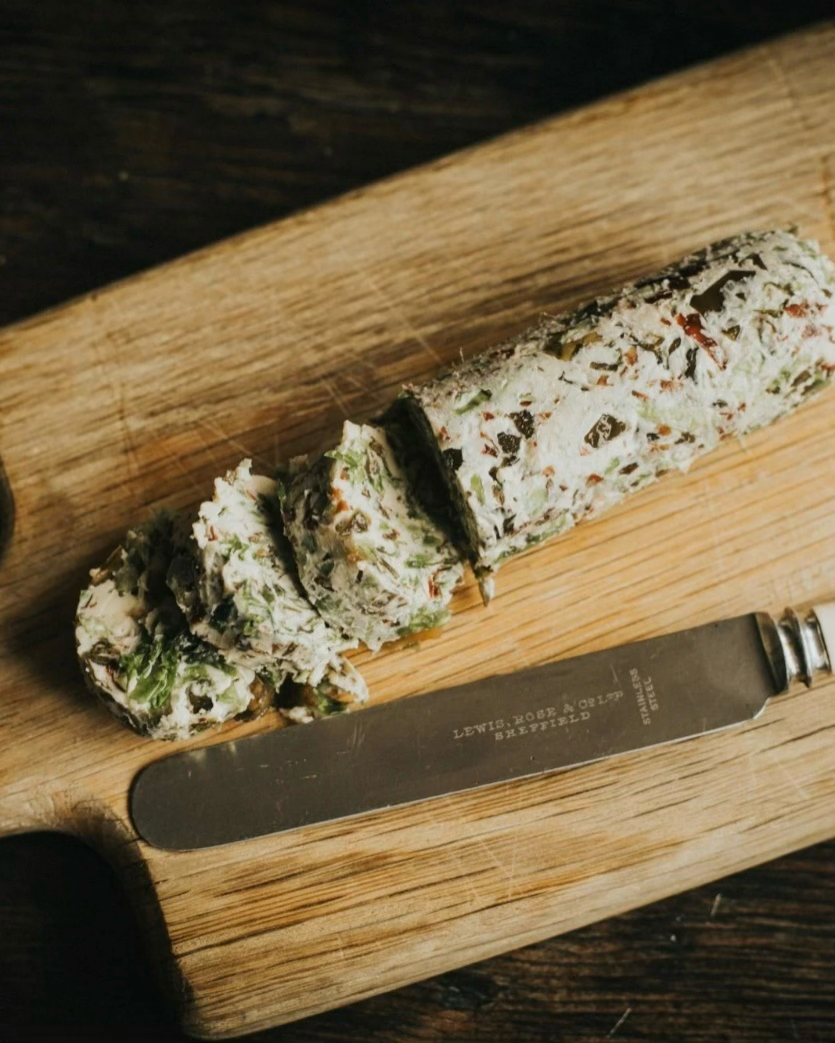
Seaweed Butter:
Ingredients:
150g of unsalted butter, softened
3g of seaweed, dulse or a mixture of dulse and sea lettuce
Instructions
- Toast the seaweed in a hot dry pan until crisp and aromatic
- Grind to a powder using a spice grinder, coffee grinder or pestle and mortar then stir through the softened butter
- Wipe a work surface with a damp cloth and place a smooth sheet of clingfilm on top of it. Wipe the clingfilm with the cloth to smooth out any creases, then place another sheet of clingfilm on top and wipe again
- Spoon the butter out onto the centre of the cling film and form into a neat log. Tightly wrap it up and secure with a knot at each end
- Store the compound butter in the freezer. When ready to use, remove from the freezer for 10 minutes or so, slice off the amount of butter you require, then return to the freezer
Scallops with seaweed and miso kombu broth:
Ingredients:
Scallops
12 large hand dived scallops, roe and skirts removed
2 tbsp of Shony seaweed
rapeseed oil
Miso kombu broth
1 tsp kombu seaweed
1000ml of fish stock
1 tbsp of miso paste
To serve
1 carrot, peeled
2 red chillies, seeds removed
3 garlic cloves, peeled
1 knob of fresh ginger, peeled
2 lemon grass sticks, hearts only
1 dash of soy sauce
1 dash of fish sauce
rapeseed oil
Garnish
1 handful of wood sorrel
1 handful of coriander cress
Instructions
- Begin by preparing the miso kombu broth. Combine all of the ingredients, bring to the boil then remove from the heat and allow to infuse until cool. Reheat before serving
- 1000ml of fish stock
- 1 tbsp of miso paste
- 1 tsp kombu seaweed
- Julienne or finely shred the carrots, chilli, garlic, ginger and lemongrass hearts
- 1 carrot, peeled
- 2 red chillies, seeds removed
- 3 garlic cloves, peeled
- 1 knob of fresh ginger, peeled
- 2 lemon grass sticks, hearts only
- Place a pan over a high heat and add a dash of rapeseed oil. Once the oil is hot, add the prepared vegetables and aromatics and cook for 2-3 minutes until soft, but with a little bite. Add a dash of soy and fish sauce to taste and set aside
- 1 dash of soy sauce
- 1 dash of fish sauce
- rapeseed oil
- Meanwhile, place a frying pan over a high heat. Pat the scallops dry with kitchen towel and press each side firmly into the shony seaweed. Add a dash of rapeseed oil to the pan, followed by the scallops, ensuring not to crowd the pan or the scallops will stew and not sear
- 12 large hand dived scallops, roe and skirts removed
- 2 tbsp of Shony seaweed
- rapeseed oil
- Cook for 45-60 seconds on each side, being careful not burn the shony or overcook the scallops. Remove from the pan and repeat to cook the remaining scallops
- Reheat the broth and whisk through until warm
- Add the warm vegetables and aromatics to a shallow bowl, followed by 3 scallops per portion. Pour over a little of the hot broth and garnish with wood sorrel and coriander cress
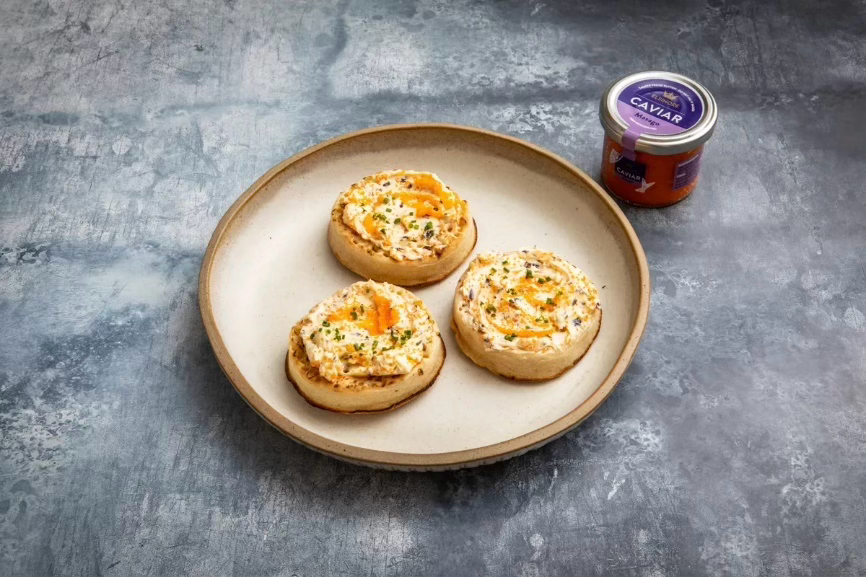
Crumpets with whipped seaweed and masago butter:
Ingredients:
Masago butter (9 crumpets)
250g of unsalted butter
50ml of milk
5g of dulse seaweed flakes, toasted
50g of masago, plus more for topping
Instructions
- Soften the butter at room temperature for at least 30 minutes
- Whip the butter on high speed for 5 minutes, or until well aerated and creamy in texture
- Reduce the speed to incorporate the milk and seaweed, then turn up the speed and whip for another 5 minutes.
- Fold through the masago
- Use to top the crumpets, adding more masago, if you like
Pink pickled onions with dulse:
Ingredients:
4 red onions, thinly sliced
1 tsp fine sea salt
250ml apple cider vinegar
250ml water
250g caster sugar
15g dried dulse
Instructions
- In a bowl, massage the onions with the salt and place them into a colander or sieve over another bowl. Set aside for at least two hours to allow the salt to draw out the excess liquid.
- Combine the water, sugar and vinegar in a saucepan over a medium-high heat. Bring to a simmer and stir until the sugar is completely dissolved.
- Add the dulse and onions to the liquid. Bring to a boil, then immediately remove from the heat.
- Whilst still hot, carefully transfer the onions, dulse and pickling liquid into a mason jar. Close, set aside, and allow to cool.
- Once at room temperature, store in the fridge.
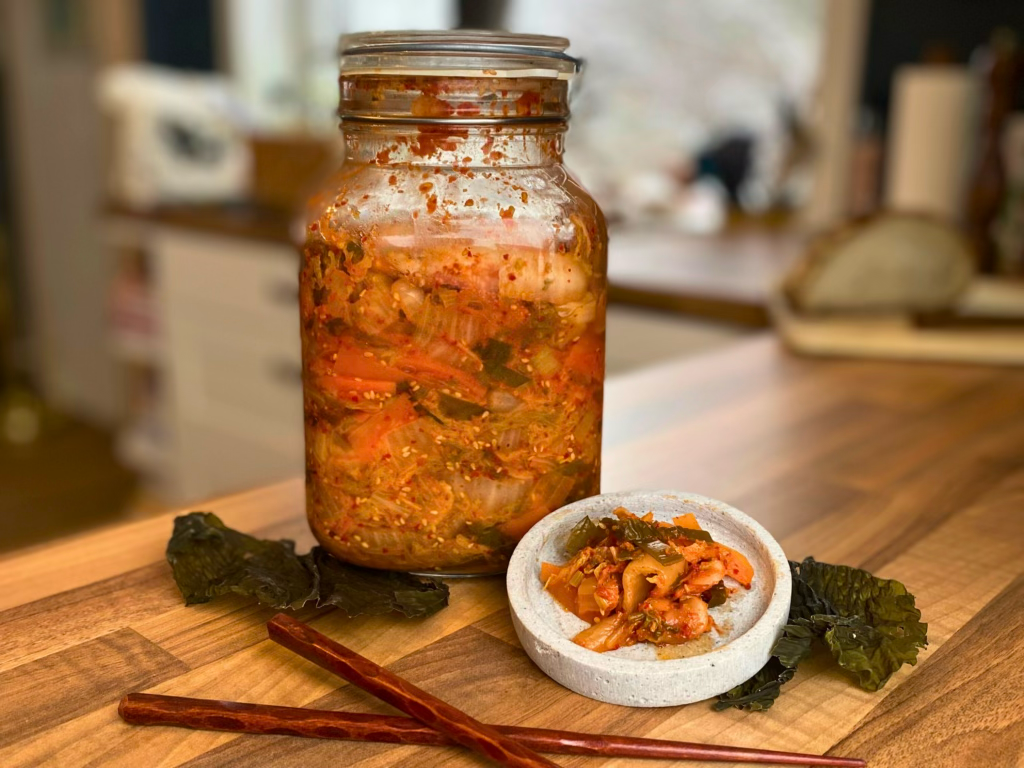
Kimchi with sugar kelp:
Ingredients:
1kg Chinese cabbage, roughly chopped into 2cm strips, base reserved
150g daikon or radishes, thinly sliced into batons
150g carrots, thinly sliced into batons
100g spring onions, roughly chopped
25g coriander, roughly chopped
100g sugar kelp, soaked in cold water overnight then cut into ribbons
150g kimchi paste (store bought or homemade)
30g fine sea salt
2 tbsp fish sauce (optional)
2 tbsp sesame seeds (optional)
1 tsp gochujang paste (optional)
Instructions
- Combine all the vegetables and sugar kelp in a bowl with the salt. Massage for five minutes with clean hands, making sure the salt gets into every crevice. Cover with a clean tea towel and leave to stand for at least two hours. The salt will draw out the liquid from the vegetables, which not only gives them a better texture, but also will help to create the anaerobic environment that the bacteria need to work.
- Add the kimchi paste to the vegetables, and massage well for another five minutes. Don’t be afraid to use some force – you should really scrunch the vegetables up so the kimchi paste gets everywhere. The more juicy the mix becomes, the better!
- Add extras to taste. Fish sauce is a popular choice as it gives the kimchi a funky flavour, sesame seeds give additional texture, and gochujang paste gives it a kick, for those who like it spicy.
- Massage again for another five minutes. There should now be plenty of liquid surrounding your veggies.
- Time to transfer the mixture to a sterilised 1L swing top jar. Using a large spoon, transfer the mix into the jar and press down firmly. You want to press the mixture down well to ensure that there are no trapped air bubbles, as this can hinder the activity of the bacteria.
- Keep transferring and pressing until the jar is almost full, with about 2 inches of space left at the top. If you have excess kimchi, move on to another jar. The kimchi will expand during the fermentation process, so it needs some room to grow in the jar.
- Take the reserved base of the cabbage from before, trim it to fit the mouth of the jar if necessary, and push it down hard on the kimchi. You should see all the liquid oozing up
Butterbean stew with sugar kelp:
Ingredients:
2 tbsp unsalted butter
2 tbsp olive oil, plus extra to finish
1 large onion, thinly sliced
3 garlic cloves, minced
2x 400g tins butterbeans
600ml chicken or vegetable stock
300g cabbage, roughly chopped
1 tbsp white wine vinegar (or to taste)
10g dill, finely chopped
25g dried sugar kelp, soaked in cold water for 2 hours (or overnight), sliced into strips
Salt
Black pepper
Instructions
- Heat the butter and oil in a large sauté pan over a medium-high heat, until foamy. Add the onions, cover and cook for about 10 minutes, stirring occasionally. The onions should be just starting to caramelise. Use a slotted spoon to transfer about a quarter of the onions to a bowl and set aside.
- Add the garlic to the pan and continue to cook until fragrant, around 2 minutes.
- Add the beans and season with salt and pepper. Use the back of a spoon to gently crush around half of the beans – the starch will help thicken the stew.
- Add the stock, bring the mixture to a boil and immediately turn down to a simmer. Simmer for 15-20 minutes.
- Add the cabbage and vinegar, stirring until everything is coated in the sauce and the cabbage is starting to wilt, but still retains a bite (around 10 minutes). Season with salt, pepper and vinegar to taste.
- Remove from the heat and stir in half the dill, and three quarters of the sugar kelp. Divide between four bowls, topping each with the remaining dill, onions, sugar kelp, a drizzle of olive oil and some extra black pepper.
- Serve and enjoy with crusty bread.
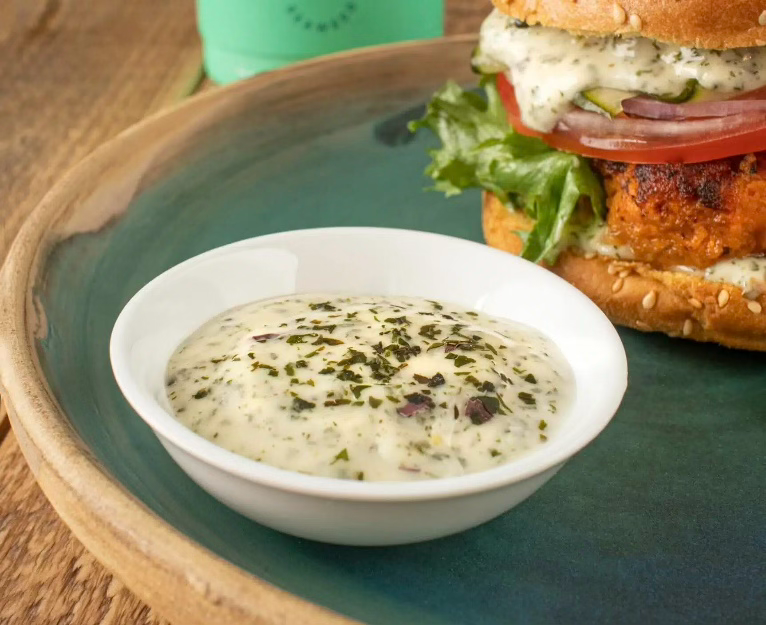
Seaweed Aioli:
Ingredients:
1 egg yolk
1 tbsp mustard
1 tbsp white wine vinegar
1 tbsp Dulse flakes
3 tbsp water
1 tsp Salt
180ml neutral oil
3 garlic cloves, minced
Instructions
- Soak the Dulse in the water for 15 minutes.
- In a food processor, add all the ingredients except for the oil and seaweed salt. Blend together, then whilst the processor is running on a low speed, slowly add the oil in a steady drizzle.
- When the aioli is thick and smooth, season to taste with the seaweed salt.
Seaweed Arancini Balls:
Ingredients:
1 onion
2 cloves garlic
3 cups vegetable stock
1 cup aborio rice
1 tbsp walnuts
1/2 cup mozzarella
½ cup fontina cheese
2 tbsp Dulse flakes
2 eggs
½ cup parmesan
1 ½ cup bread crumbs
Oil to fry
Instructions
- Dice onion and garlic. Take a large pot, add a dash of oil and add the onions. Cook until golden then add the garlic.
- Add the stock and rice to your pot. Bring the heat low and place a lid over the pot. Let simmer for 20 minutes or until the rice is soft.
- When the rice is ready, remove it from the pot to a lined tray for the rice to cool. Let the rice cool to room temperature before continuing.
- While waiting, combine mozzarella, fontina, chopped walnuts and dulse in a bowl.
- Beat the eggs in a large mixing bowl and stir in the room temperature rice. Mix in ⅔ cup of breadcrumbs and the parmigiano.
- Take a flat plate or dish and pour the rest of the breadcrumbs onto it.
- Now using your hands make a 1 ½ inch ball of rice then press your thumb into the centre and put in 2 tsp of the walnut and cheese mixture. Pinch together the ball and roll it in the breadcrumbs. Repeat this until you are out of rice.
For best results refrigerate the balls for 1 hour. - When you are ready take a frying pan, add 1 ½ cm of oil and wait until very hot. You can test it with one of your arancini balls, place it in the oil and if it starts to bubble around the edges your oil is ready.
- Add your arancini balls in batches of 4 or 5 at a time and turn every few minutes until golden on all sides. This usually takes 3 – 4 minutes. Remove them from the pan with a slotted spoon and place on some paper towel.
- Repeat with all of the balls.
- Season and serve with you choice of accompaniment.
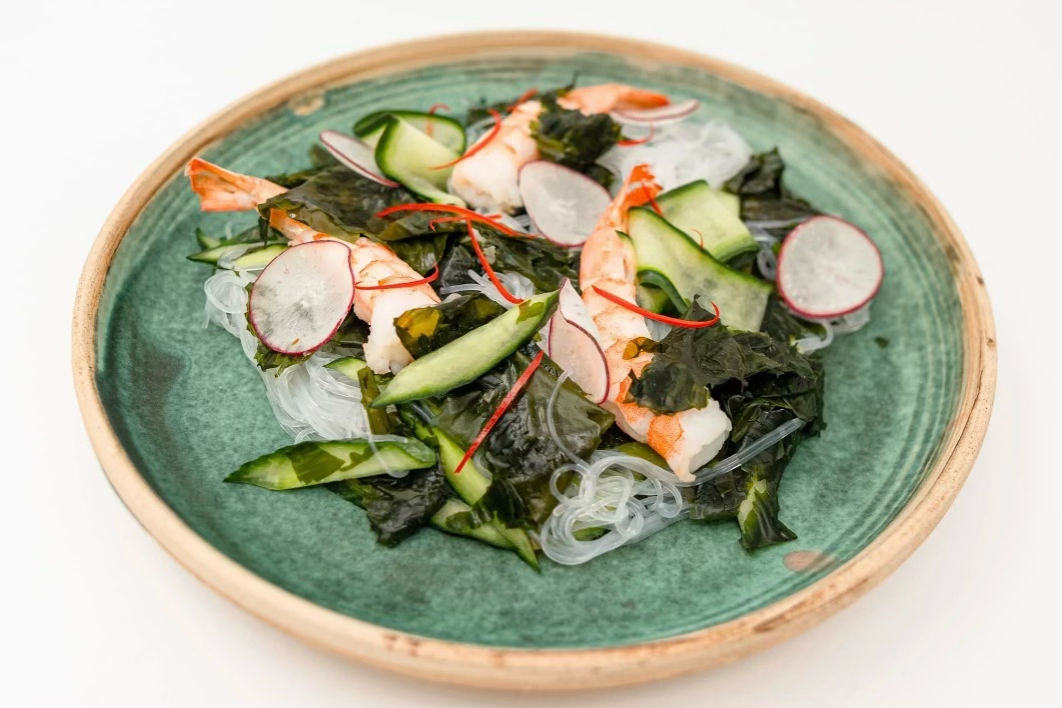
Winged kelp salad with noodles and prawns:
Ingredients:
120g cucumber
20g winged kelp
12 raw prawns
100g glass noodles
1 tbsp salt
Dressing:
2tbsp white wine vinegar
1 tbsp mirin
1 tbsp sugar
¼ tsp of salt
1 tsp of soy sauce
½ tsp of sesame oil
1 tbsp vegetable oil
Instructions
- Soak the kelp in cold water for 15 minutes. Remove the stalks and cut into bite size pieces.
- Cut the cucumber lengthways and scrape out the seeds with a teaspoon. Slice it thinly, sprinkle with salt and mix well. Leave for 20 minutes to allow the water to drain out naturally, then rinse and pat dry with a cloth.
- Simmer the noodles for 3 minutes whilst stirring continuously, then strain and rinse well with cold water.
- Meanwhile, add all ingredients for the dressing into a bowl and whisk well to combine.
- Peel and clean the prawns. Bring a pot of salted water to a simmer before adding the prawns and cooking for 2 minutes.
- Mix the noodles with the kelp, cucumber and dressing. Transfer everything to a plate and top with the prawns.
Our Address
Irish Shore Seaweeds
82 Garron Road, Carnlough,
Co.Antrim, BT44 0JU

Project Supported by:

© 2026 Irish Shore Seaweeds | Website Designed & Built by NI Designer